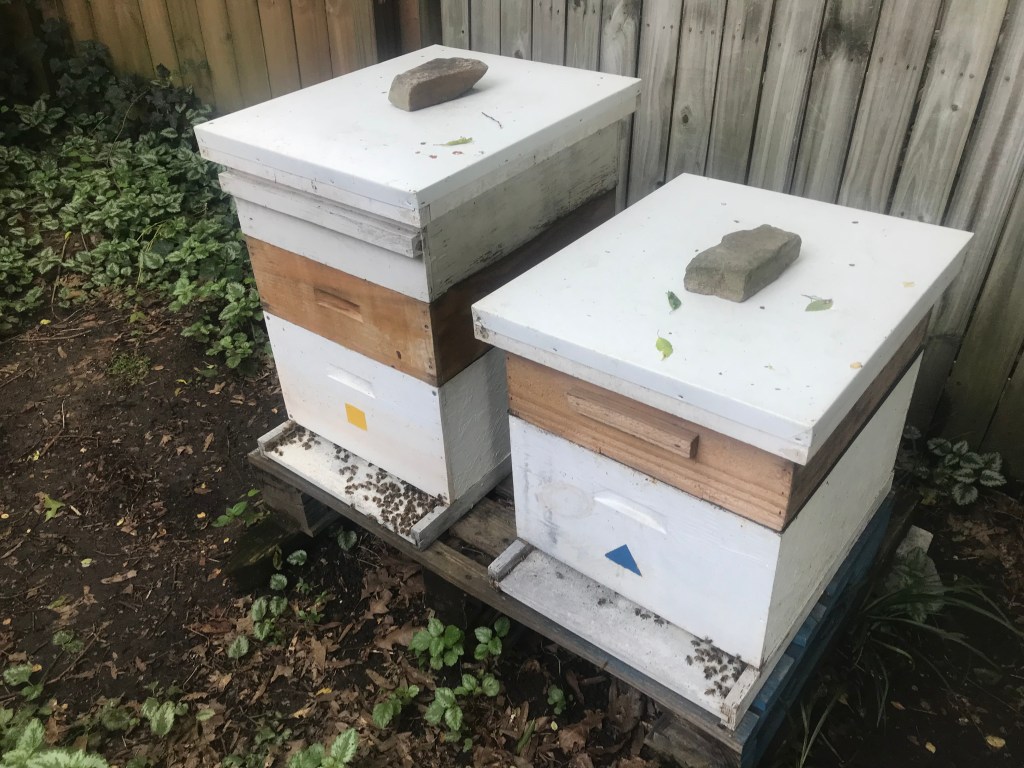
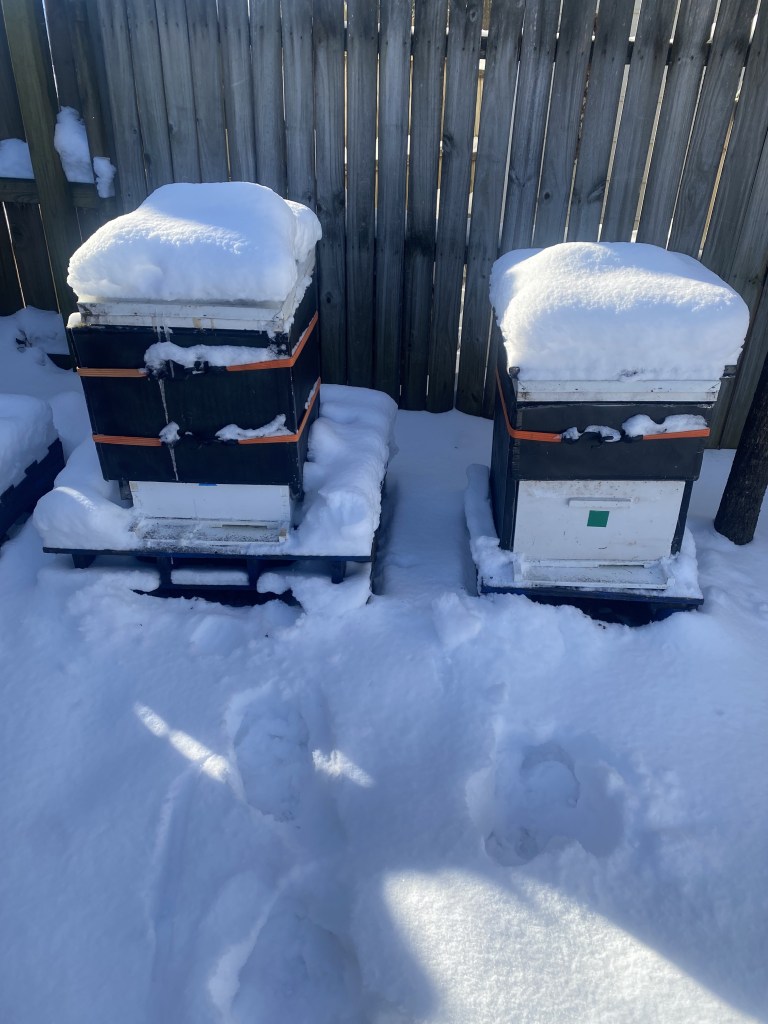
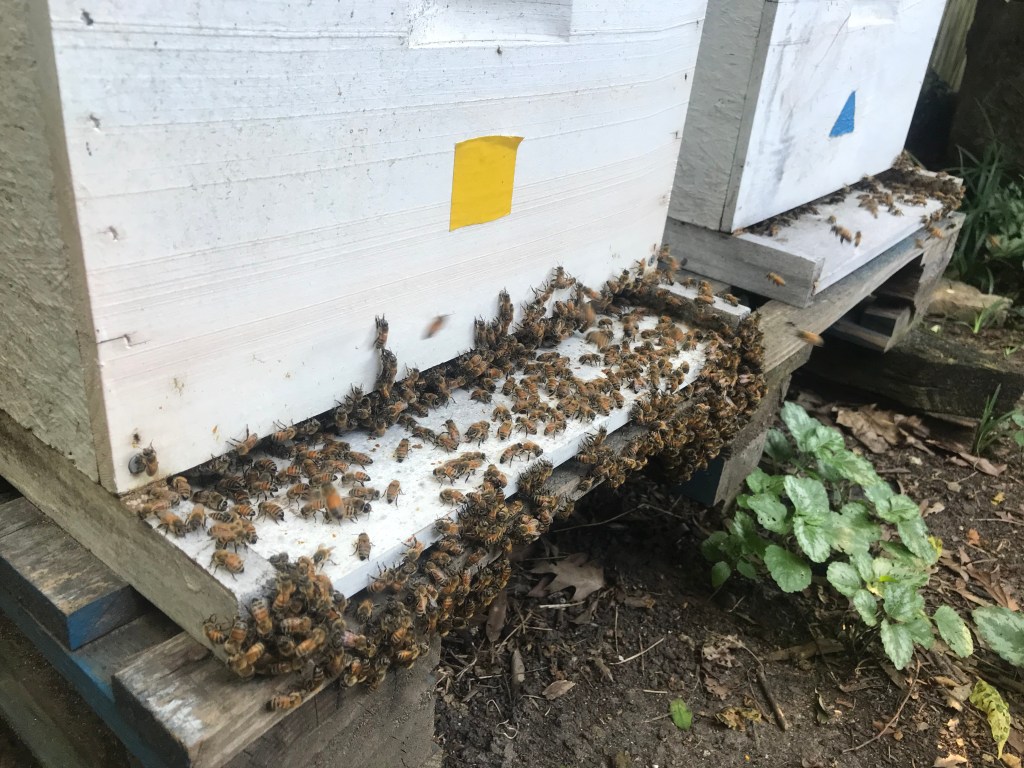
Our apiary is located in Charlotte, North Carolina. Right now we’re tending one thriving hive, though at our biggest we’ve kept as many as four buzzing away at once.
Meet the Hives
Every hive at Halo Honey gets a name, and it’s always somewhere special to Hal and Melissa. Over the years, our bees have called the following hives home:
– Greenville (SC, a favorite weekend vacation spot)
– Flagstaff (AZ, where the couple honeymooned)
– Wylie (an ode to Lake Wylie, where Hal lived when they met)
– Cashiers (Another special place in the mountains of NC)
A Peek Inside the Hive
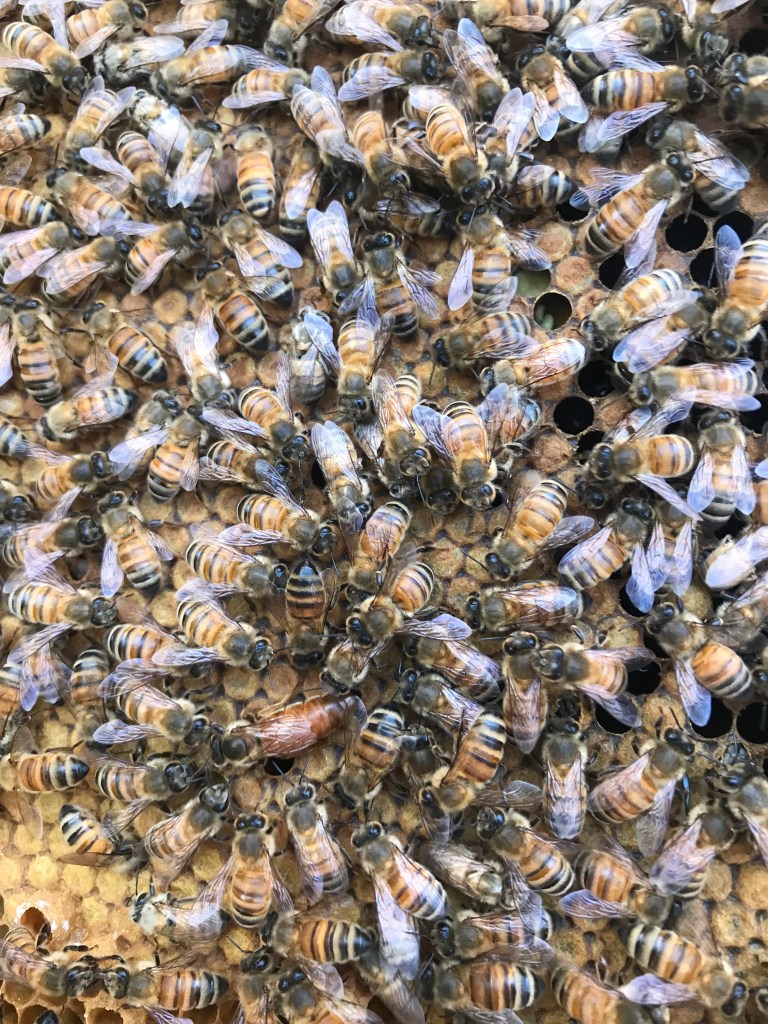
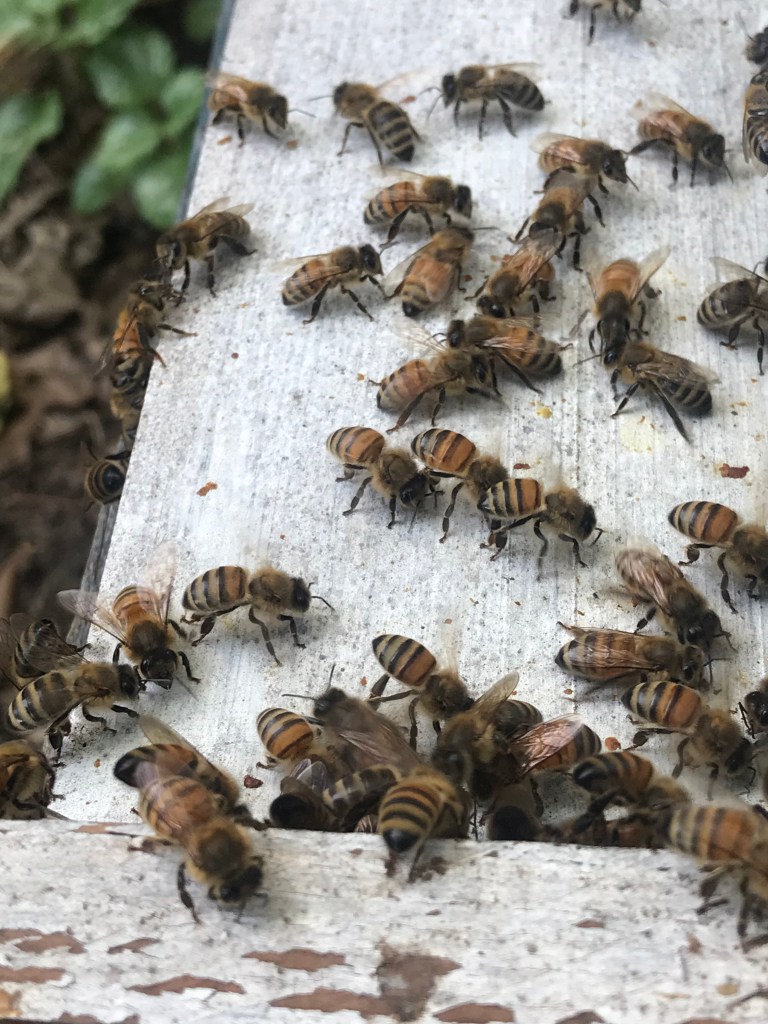
A honeybee colony runs like a well-organized team. A single queen spends her days laying eggs, while thousands of worker bees — all female — forage for nectar and pollen, build wax comb, and care for the young. Male bees, called drones, have one job: mating with new queens from other colonies.
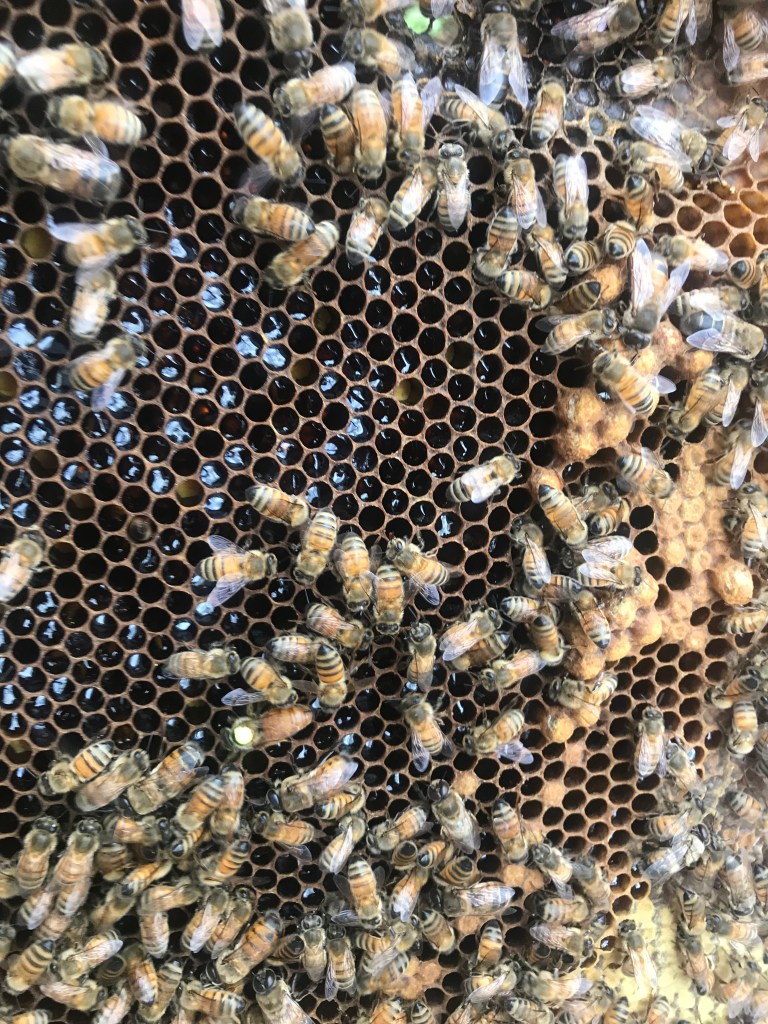
Worker bees turn the nectar they collect into honey by adding enzymes and fanning it with their wings to evaporate the extra moisture, then store it in hexagonal wax cells for later. Those hexagons aren’t just pretty — it’s the most efficient shape for packing in the most honey using the least wax.
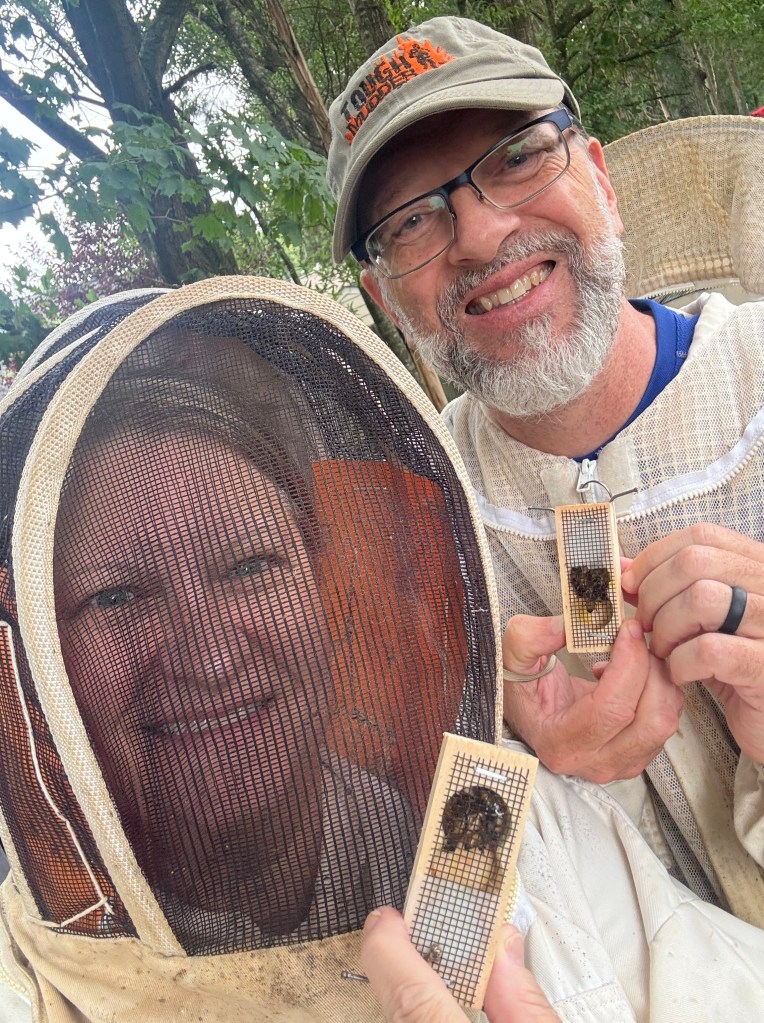
Meet the Queen
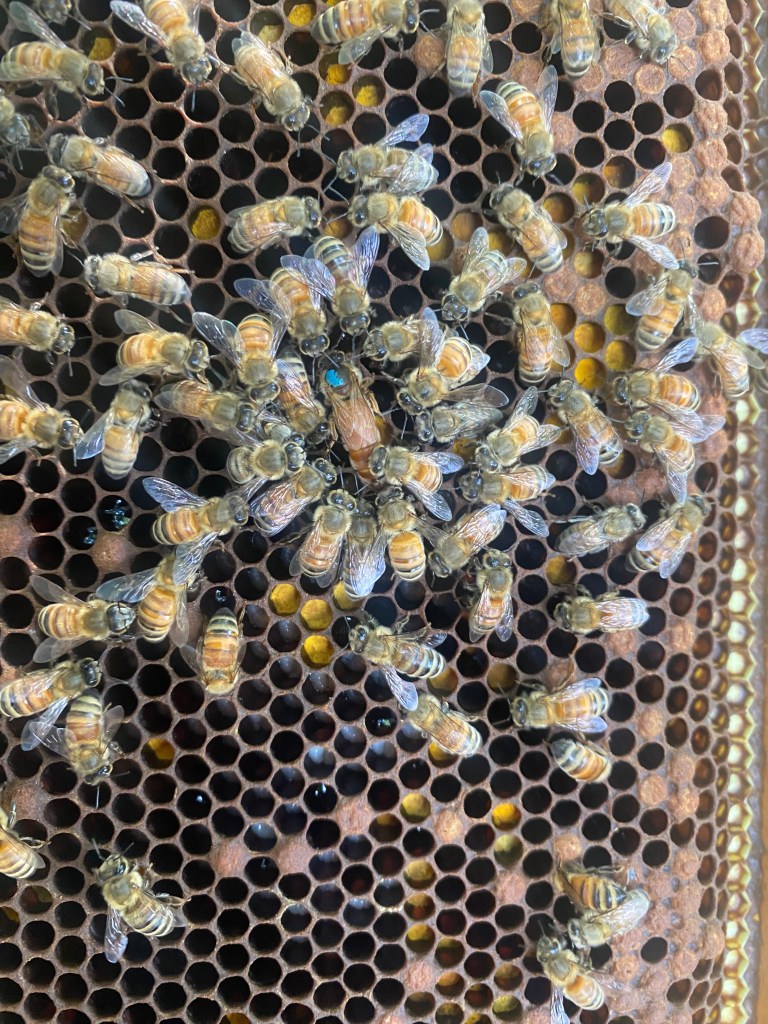
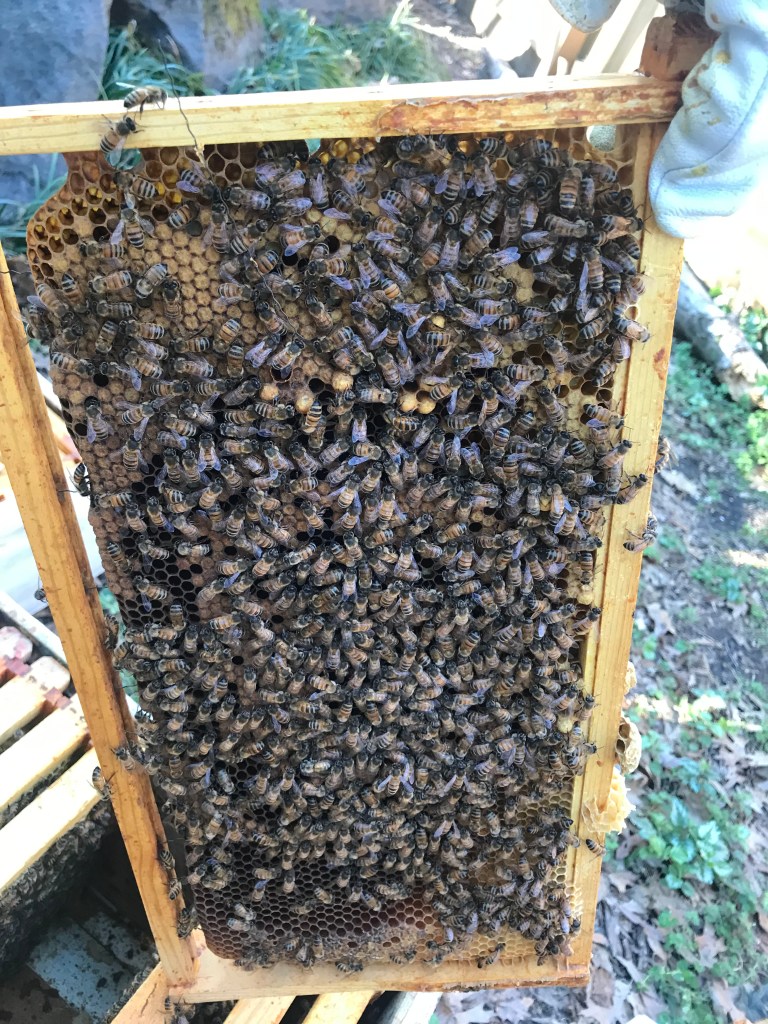
Every hive has exactly one queen, and she’s the only bee who lays eggs — often more than 1,500 a day during her prime, keeping the colony’s numbers strong. Queens aren’t born special; any young female larva can become one if she’s fed royal jelly for her entire larval stage instead of just the first few days, and that richer diet is what lets her reproductive organs fully develop. Once she’s laying, the queen releases a pheromone that keeps her workers calm, cohesive, and focused on their jobs — beekeepers sometimes call it “queen substance.” A healthy queen can live two to three years, far longer than the workers she mothers, though beekeepers will occasionally requeen a hive (like Hal and Melissa are doing in the photo above) to keep a colony’s egg-laying strong as a queen ages.

